

The 60502-2 standard is an important specification in the field of power cables. This article provides a detailed explanation of 60502-2 from four aspects: scope, construction, electrical properties, and testing requirements. Understanding this standard is crucial for professionals in the cable industry to ensure the quality and safety of power cables.
The scope of 60502-2 encompasses various types of power cables used for electricity transmission and distribution systems. It includes cables with rated voltages up to 30 kV and covers both indoor and outdoor installations. The standard defines the general requirements for these cables, including their design, materials used, manufacturing processes, and performance characteristics.
Furthermore, it specifies the specific cable types covered by this standard such as single-core or multi-core cables with copper or aluminum conductors. It also addresses different insulation materials like PVC (Polyvinyl Chloride), XLPE (Cross-linked Polyethylene), or EPR (Ethylene Propylene Rubber).
In summary, 60502-2 sets out a comprehensive framework that ensures uniformity in manufacturing practices while meeting safety standards for power cable applications.
The construction requirements outlined in 60502-2 define how power cables should be designed and manufactured to meet specific performance criteria. These criteria include mechanical strength, resistance to environmental factors such as moisture or temperature variations, fire resistance properties, and electrical conductivity.
This section specifies details about conductor sizes ranging from small cross-sectional areas suitable for low voltage applications to larger sizes required for high voltage transmission lines. It also covers aspects like insulation thicknesses based on voltage ratings to ensure proper dielectric strength.
Furthermore,the use of protective layers such as metallic screens or armor is addressed depending on the application environment. Overall,the construction requirements aim at providing durable yet flexible power cables capable of withstanding various operating conditions while maintaining electrical integrity throughout their service life.
This aspect focuses on defining key electrical parameters that determine the performance capabilities of power cables according to their intended usage scenarios.
The first parameter addressed is conductor resistance which affects energy losses during transmission.
Another important property discussed is insulation resistance which indicates how well a cable can withstand leakage currents.
Capacitance between conductors influences signal propagation characteristics while reactance determines impedance levels at different frequencies.
Moreover,dielectric strength specifications establish minimum values necessary to prevent breakdowns under normal operating conditions.
In addition,short-circuit current ratings are defined based on thermal stability considerations.


 America
  Japan
Japan  Thai
Thai  assamese
  afr
afr  albanian
  Amharic
  Arabic
  Armenian
  Aymara
  Azerbaijani
  Basque
  belarusian
  Bengali
  Bhojpuri
  Bosnian
  Bulgarian
  bur
bur  Catalan
  Cebuano
  corsican
  Czech
Czech  Danish
  German
  Divish
  Greek
Greek  America
  Esperanto
  Estonian
  Filipino
  Finnish
  French
  Georgian
  irish
irish  galician
  Guaraní
  Gujarati
  hausa
hausa  Hawaiian
  Hindi
Hindi  Khmer
Khmer  hmn
hmn  Croatian
  Haitian
  Hungarian
  igbo
igbo  Icelandic
  Indonesian
  Italian
  Javanese
  Kannada
  Kinyarwanda
  Kyrgyz
  Konkani
  Korean
  Kurdish
  Lao
Lao  Latin
Latin  latvian
  lingala
  Lithuanian
  Luxembourgish
  luganda
  Macedonian
  malayalam
  Maori
Maori  Marathi
 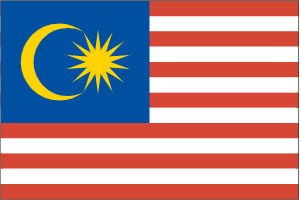 Malay
Malay  Maltese
  Nepali
  Dutch
Dutch  Norwegian
  Nyanja
  oriya
oriya  Oromo
Oromo  Punjabi
 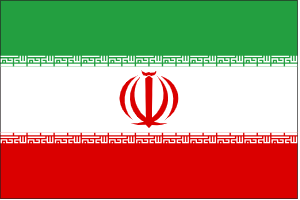 farsi
farsi  Polish
  Portuguese
  Pashto
  Quechua
  Romanian
  Russian
  Sanskrit
  Sinhalese
  Slovak
  Slovenian
  Samoan
  Sindhi
  Somali
  Hebrew
  Serbian
  Sundanese
  Swahili
  Swedish
  Tamil
Tamil  Tatar
Tatar  Telutonic
  Tajik
Tajik  Tigrinian
  Shierqi
  Turkmen
  TWI
TWI  Ukrainian
  Urdu
Urdu  Vietnamese
  Welsh
Welsh  xhosa
xhosa  Yiddish
  Yoruba
  Zulu
Zulu