

Power cables play a crucial role in the transmission and distribution of electricity. They are an essential component of electrical systems, ensuring the safe and efficient delivery of power to homes, businesses, and industries. In this article, we will explore power cables from four different aspects: their construction, types, applications, and future developments.
The construction of power cables involves several layers that provide insulation and protection to the conductors within. The core component is the conductor itself, typically made from copper or aluminum due to their excellent conductivity properties. These conductors are insulated with materials such as PVC (Polyvinyl Chloride), XLPE (Cross-Linked Polyethylene), or EPR (Ethylene Propylene Rubber) to prevent electrical leakage.
Around the insulated conductor(s), a metallic shield is often added for additional protection against electromagnetic interference (EMI) and external influences. This shield can be made from aluminum or copper tape or even braided wires depending on specific requirements.
To ensure mechanical strength and durability, power cables have an outer sheath layer made from materials like PVC or PE (Polyethylene). This sheath protects against moisture ingress as well as abrasion caused by external factors such as rocks or rodents.
There are various types of power cables available based on their voltage ratings and application requirements:
a) Low Voltage Cables:This category includes cables with voltage ratings up to 1kV used for domestic wiring in residential buildings, offices, small industries etc. These low voltage cables are usually single-core or multi-core constructions with PVC insulation suitable for indoor installations.
b) Medium Voltage Cables:Catering to voltages ranging between 1kV - 35kV , medium voltage cables find applications in underground distribution networks supplying electricity to residential areas as well as industrial complexes.They feature XLPE insulation along with metallic shielding for enhanced performance under varying environmental conditions..
c) High Voltage Cables:Including voltages above 35kV , high voltage cable finds usage in long-distance transmission lines where significant amounts of electricity need transportation over vast distances.High-voltage cable designs incorporate advanced insulating materials like EPR/XLPE combined with multiple layers shielding systems ensuring maximum safety during operation..
In residential settings,power cabling serves purposes such lighting,power outlets,Air-conditioning units etc.These low-voltage AC/DC wiring systems facilitate seamless energy flow throughout households ensuring uninterrupted supply at all times.
b.Commercial Applications :In commercial buildings,power cabling caters towards powering office equipment,lifts,hvac units,data centers etc.Medium & high-voltage cabling also finds usage in shopping malls,hospitals,schools,and other public infrastructure facilities enabling smooth functioning through reliable energy supply..
c Industrial Applications :The industrial sector relies heavily on robust power cable infrastructure.High-voltage transmission lines carry massive amounts of electricity across factories,mines,oil refineries,and other heavy-duty operations.Large-scale machinery,motors,and control systems depend on these specialized power cable solutions.
d Renewable Energy Sector :Rapid growth in renewable energy sources like solar & wind farms has ledto increased demand for specialized high-capacity underground/submarine HVDC(High-Voltage Direct Current)cable solutions.These enable efficient transportof clean energy over long distances while minimizing losses.
The future development trends within the field suggest ongoing advancements aimed at enhancing efficiency,reducing losses,& improving overall performance.Some key areas include:
-Smart Grid Integration : Incorporating smart technologies into existing grid infrastructure allows better monitoring,distribution management,& fault detection,resultingin improved reliability&energy conservation.
-High-Temperature Superconductivity : Ongoing research focuseson developing superconductive materials capableof transmitting large quantitiesof current without resistance.This technology could revolutionizepower transmission by reducing losses& increasing capacity significantly.
-Eco-Friendly Insulation Materials : Development efforts concentrateon finding environmentally friendly alternativesfor insulatingmaterials.Currently used insulators,suchas XLPE,PVC,EPR,may be replacedby biodegradable options that offer similaror superiorperformance characteristics.
In conclusion,power cables form an integral partof our modern society,enabling us toeasily accessand utilizeelectricityforvariousapplications.Theirconstruction,various types,and wide-rangingapplicationshighlightthe criticalrole theyplayinensuringefficientandreliabletransmissionanddistributionofsafepowertoend-users.Aswe looktothefuture,theongoingdevelopmenteffortswithintheindustrywillundoubtedlybringforthinnovativeadvancementsthatwill furtherenhancetheperformanceand sustainabilityofpowercableinfrastructureacrossallsectors


 America
  Japan
Japan  Thai
Thai  assamese
  afr
afr  albanian
  Amharic
  Arabic
  Armenian
  Aymara
  Azerbaijani
  Basque
  belarusian
  Bengali
  Bhojpuri
  Bosnian
  Bulgarian
  bur
bur  Catalan
  Cebuano
  corsican
  Czech
Czech  Danish
  German
  Divish
  Greek
Greek  America
  Esperanto
  Estonian
  Filipino
  Finnish
  French
  Georgian
  irish
irish  galician
  Guaraní
  Gujarati
  hausa
hausa  Hawaiian
  Hindi
Hindi  Khmer
Khmer  hmn
hmn  Croatian
  Haitian
  Hungarian
  igbo
igbo  Icelandic
  Indonesian
  Italian
  Javanese
  Kannada
  Kinyarwanda
  Kyrgyz
  Konkani
  Korean
  Kurdish
  Lao
Lao  Latin
Latin  latvian
  lingala
  Lithuanian
  Luxembourgish
  luganda
  Macedonian
  malayalam
  Maori
Maori  Marathi
 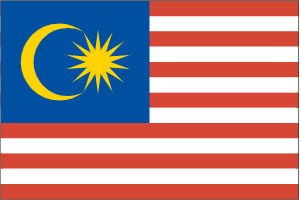 Malay
Malay  Maltese
  Nepali
  Dutch
Dutch  Norwegian
  Nyanja
  oriya
oriya  Oromo
Oromo  Punjabi
 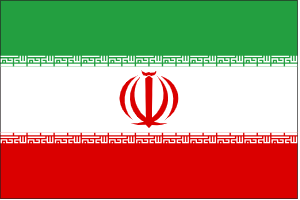 farsi
farsi  Polish
  Portuguese
 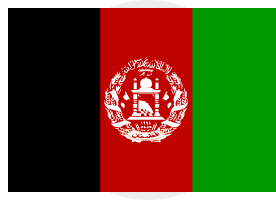 Pashto
  Quechua
  Romanian
  Russian
 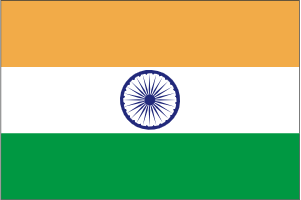 Sanskrit
  Sinhalese
  Slovak
  Slovenian
  Samoan
  Sindhi
  Somali
  Hebrew
  Serbian
  Sundanese
  Swahili
  Swedish
  Tamil
Tamil  Tatar
Tatar  Telutonic
  Tajik
Tajik  Tigrinian
  Shierqi
  Turkmen
  TWI
TWI  Ukrainian
  Urdu
Urdu  Vietnamese
  Welsh
Welsh  xhosa
xhosa  Yiddish
  Yoruba
  Zulu
Zulu