

Power cables are an essential component of any electrical system, providing the necessary connection between power sources and various devices. These cables play a crucial role in transmitting electricity safely and efficiently. In this article, we will explore power cables from four different aspects: their construction, types, applications, and future developments.
Power cables are typically composed of several layers that work together to ensure the safe transmission of electricity. The core component is the conductor, which carries the electrical current. Copper and aluminum are commonly used as conductors due to their excellent conductivity properties.
The conductor is surrounded by an insulating layer made of materials such as PVC (polyvinyl chloride) or XLPE (cross-linked polyethylene). This insulation prevents leakage of current and protects against electrical shocks.
A protective sheath is then added around the insulation layer to provide mechanical strength and resistance against external factors like moisture or chemicals. This sheath can be made from materials like PVC or low-smoke zero-halogen (LSZH) compounds.
There are various types of power cables available to suit different applications:
- Low voltage power cables: These are used for domestic purposes or in small-scale industries where lower amounts of electricity need to be transmitted.
- Medium voltage power cables: Designed for medium-scale industrial applications where higher voltages are required.
- High voltage power cables: Used in large-scale industrial projects or for long-distance transmission of electricity at high voltages.
The versatility of power cables allows them to be used in a wide range of applications:
- Building wiring: Power cables form the backbone for electrical systems within residential buildings, commercial complexes, hospitals, etc., providing a reliable source of electricity throughout these structures.
< p > - Industrial installations : Power cable s play a vital role in powering heavy machinery , equipment , and other industrial installations . They must withstand harsh environments , high temperatures , vibrations , etc .< / p > < p > - Underground cabling : In urban areas where overhead lines may not be feasible due to space constraints or aesthetic reasons , underground cabling using specialized power cable s ensures uninterrupted supply without compromising on safety .< / p > < h 4 > 4、 Future Developments < p > As technology advances , so does the development o f po wer cable s . Here ar e some exciting trends shaping th e future o f thi s industry : < P >- Smart Grid Integration : With th e rise o f smart grid technology , power cable s will need t o adapt t o new requirements such as bidirectional energy flow , communication capabilities , and remote monitoring . This integration wil l enable better management and optimization of th e electrica l grid, leading t o improved efficiency and reliability . < P /> < P />- Renewable Energy Integration : As renewable energy sources lik e solar an d wind become more prevalent , power cable s wil l play a crucial rol e i n transmitting this clean energy t o consumers . Thes e cabl es mus t b e abl eto handle fluctuating loads an d varying conditions associated with renewable generation . < P /> < P />- Increased Efficiency : Efficiency improvement remains oneofthegoalsinthedevelopmentofpowercables. By reducing resistive losses during transmission, more energy can reach its intended destination. New materials, such as superconductors, are being exploredtoachievethisgoal. In conclusion, powercablesareanindispensablepartofourelectricalinfrastructure.Theyensuretheefficientandsafetransmissionofelectricityacrossavarietyofapplications.Fromtheirconstructiontovariousapplicationstypes,andfuturedevelopments,powercableswillcontinuetoplayakeyroleinmeetingthegrowingdemandforelectricityinourmodernworld


 America
  Japan
Japan  Thai
Thai  assamese
  afr
afr  albanian
  Amharic
  Arabic
  Armenian
  Aymara
  Azerbaijani
  Basque
  belarusian
  Bengali
  Bhojpuri
  Bosnian
  Bulgarian
  bur
bur  Catalan
  Cebuano
  corsican
  Czech
Czech  Danish
  German
  Divish
  Greek
Greek  America
  Esperanto
  Estonian
  Filipino
  Finnish
  French
  Georgian
  irish
irish  galician
  Guaraní
  Gujarati
  hausa
hausa  Hawaiian
  Hindi
Hindi  Khmer
Khmer  hmn
hmn  Croatian
  Haitian
  Hungarian
  igbo
igbo  Icelandic
  Indonesian
  Italian
  Javanese
  Kannada
  Kinyarwanda
  Kyrgyz
  Konkani
  Korean
  Kurdish
  Lao
Lao  Latin
Latin  latvian
  lingala
  Lithuanian
  Luxembourgish
  luganda
  Macedonian
  malayalam
  Maori
Maori  Marathi
  Malay
Malay  Maltese
  Nepali
  Dutch
Dutch  Norwegian
  Nyanja
  oriya
oriya  Oromo
Oromo  Punjabi
  farsi
farsi  Polish
  Portuguese
 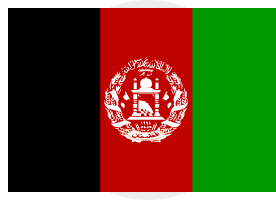 Pashto
  Quechua
  Romanian
 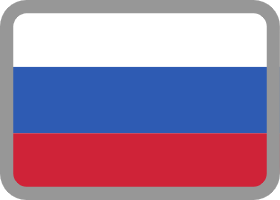 Russian
 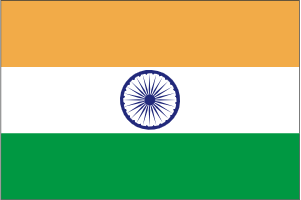 Sanskrit
  Sinhalese
  Slovak
  Slovenian
  Samoan
  Sindhi
  Somali
  Hebrew
  Serbian
  Sundanese
  Swahili
  Swedish
  Tamil
Tamil  Tatar
Tatar  Telutonic
  Tajik
Tajik  Tigrinian
  Shierqi
  Turkmen
  TWI
TWI  Ukrainian
  Urdu
Urdu  Vietnamese
  Welsh
Welsh  xhosa
xhosa  Yiddish
  Yoruba
 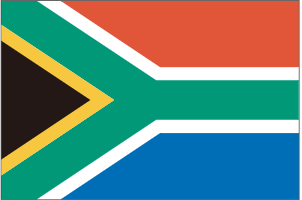 Zulu
Zulu