
The multi-core cable docking method refers to the process of connecting or joining multiple cores within a single cable. It involves carefully aligning and connecting each core to ensure proper signal transmission between them.
This method is commonly used in various industries where there is a need for transmitting different types of signals simultaneously, such as telecommunications, data centers, and industrial automation.
The primary objective of multi-core cable docking is to establish reliable connections between cores while minimizing interference or crosstalk between them.
The use of multi-core cables offers several advantages over traditional single-core cables:
a) Space Efficiency: Multi-core cables allow for the transmission of multiple signals through a single physical medium. This eliminates the need for separate cables for each signal type, resulting in significant space savings.
b) Cost Savings: By reducing the number of individual cables required for signal transmission, multi-core cables can help reduce installation costs and simplify maintenance procedures.
c) Improved Signal Integrity: The careful design and construction techniques employed in multi-core cables minimize interference or crosstalk between adjacent cores. This ensures that each signal maintains its integrity throughout the entire length of the cable.
The implementation of multi-core cable docking methods also presents certain challenges that need to be addressed:
a) Alignment Accuracy: Achieving precise alignment during core-to-core connection is crucial to ensure optimal performance. Any misalignment can result in poor signal quality or complete failure.
b) Crosstalk Mitigation: As multiple signals are transmitted through adjacent cores within a single cable, there is always a risk of crosstalk occurring – where one signal interferes with another due to electromagnetic coupling. Advanced shielding techniques are employed to minimize this effect.
In recent years,the demand for high-speed data transmission has been increasing rapidly with advancements in technology such as 5G networks,Internet-of-Things (IoT),and artificial intelligence (AI). To meet these demands,the development of more advanced multi-core cable docking methods will be essential.
New materials with improved electrical properties will be developed,allowing higher bandwidths and faster data rates.In addition,new manufacturing processes will enable more precise alignment during core-to-core connection.These advancements will further enhance space efficiency ,cost savings ,and overall performance.
Furthermore,researchers are exploring innovative solutions like optical fibers embedded within traditional copper-based multicore cables.This hybrid approach combines both electrical conductivity provided by copper wires along with high-speed optical communication capabilities offered by fiber optics.This integration could revolutionize data transmission capabilities.
In conclusion,the development of efficientmulti-core cable docking methods has significantly contributedto advancesin telecommunicationstechnology.With ongoing researchanddevelopment efforts,itis expectedthatfuturerefinementswill continueenhancingthespaceefficiency,costsavings,andperformanceofmulticorecables


 America
  Japan
Japan  Thai
Thai  assamese
  afr
afr  albanian
  Amharic
  Arabic
  Armenian
  Aymara
  Azerbaijani
  Basque
  belarusian
  Bengali
  Bhojpuri
  Bosnian
  Bulgarian
  bur
bur  Catalan
  Cebuano
  corsican
  Czech
Czech  Danish
  German
  Divish
  Greek
Greek  America
  Esperanto
  Estonian
  Filipino
  Finnish
  French
  Georgian
  irish
irish  galician
  Guaraní
  Gujarati
  hausa
hausa  Hawaiian
  Hindi
Hindi  Khmer
Khmer  hmn
hmn  Croatian
  Haitian
  Hungarian
  igbo
igbo  Icelandic
  Indonesian
  Italian
  Javanese
  Kannada
  Kinyarwanda
  Kyrgyz
  Konkani
  Korean
  Kurdish
  Lao
Lao  Latin
Latin  latvian
  lingala
  Lithuanian
  Luxembourgish
  luganda
  Macedonian
  malayalam
  Maori
Maori  Marathi
 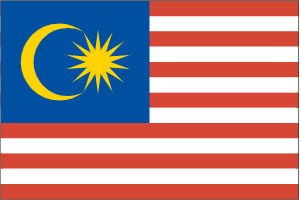 Malay
Malay 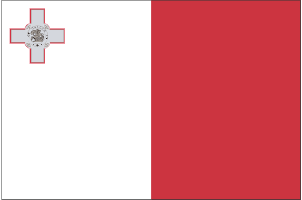 Maltese
  Nepali
  Dutch
Dutch  Norwegian
 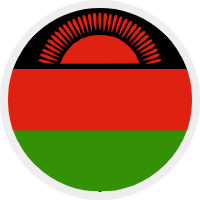 Nyanja
  oriya
oriya  Oromo
Oromo  Punjabi
 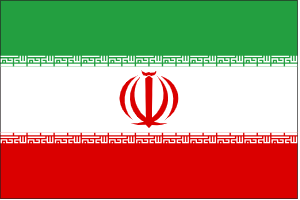 farsi
farsi  Polish
  Portuguese
  Pashto
  Quechua
  Romanian
  Russian
  Sanskrit
  Sinhalese
  Slovak
  Slovenian
  Samoan
  Sindhi
  Somali
  Hebrew
  Serbian
  Sundanese
  Swahili
  Swedish
  Tamil
Tamil  Tatar
Tatar  Telutonic
  Tajik
Tajik  Tigrinian
  Shierqi
  Turkmen
  TWI
TWI  Ukrainian
  Urdu
Urdu  Vietnamese
  Welsh
Welsh  xhosa
xhosa  Yiddish
  Yoruba
  Zulu
Zulu